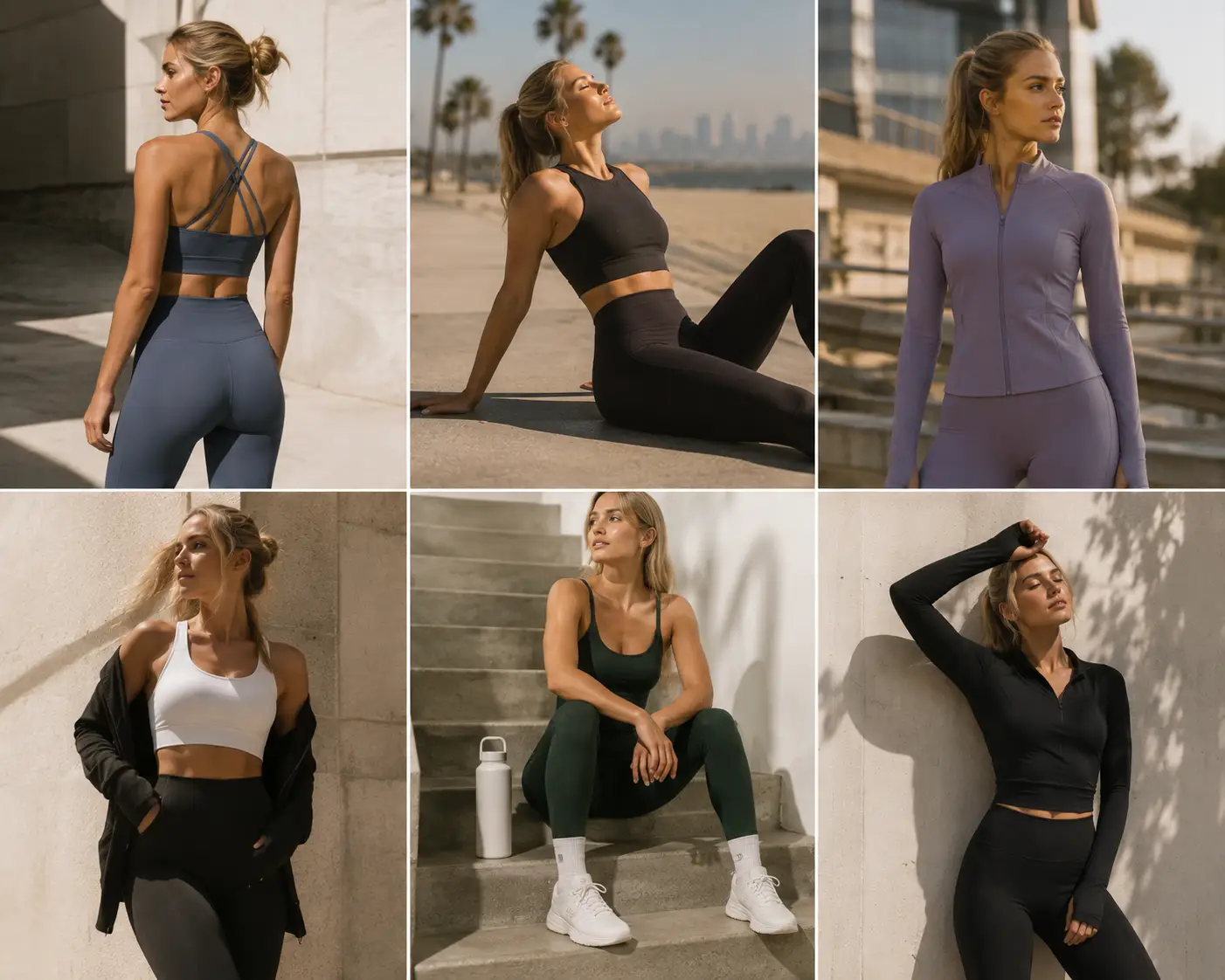
Hyper-Durability Is Becoming a New Standard for Premium Athleisure
The Science of Feel: Why Softness Can Be Engineered
Softness may appear emotional, but premium hand feel is also highly technical.
The Science of Feel begins with decisions involving yarn type, filament structure, knitting construction, density, elastane ratio, finishing, surface character, weight, and recovery.
Two nylon-spandex fabrics with similar compositions can feel dramatically different.
One may feel dry and technical. Another may feel buttery and smooth. A third can offer soft compression with an almost second-skin sensation.
That is why The Science of Feel matters for premium athleisure.
For high-end yoga apparel, buyers may evaluate whether a fabric delivers:

Preferred Nylon, Recycled Nylon and the Move Beyond Conventional Fossil-Based Nylon
Conventional nylon is widely used in performance apparel because of its durability, stretch characteristics, and suitability for sportswear. However, conventional synthetic nylon production generally depends on fossil-fuel-derived chemistry. Textile Exchange identifies recycled nylon and bio-based nylon among alternatives being explored to reduce reliance on conventional fossil-based inputs.
For forward-looking athleisure brands, this creates several sourcing pathways.

Be Planet: Sustainability Should Include Longer Product Performance
Be Planet should not be only a marketing phrase.

Hyper-Durability Meets Advanced Korean Knitting Technology
Premium performance fabrics depend on more than fiber composition.
Knitting technology has significant influence on stretch behavior, density, stability, surface appearance, compression, recovery, and tactile character.
For yoga and athleisure developments, WOODA can support exploration of specialized constructions built around combinations such as:

Eco-Conscious Nylon Can Still Be Visually Exciting
Responsible material development does not have to look basic.
Sustainability direction, tactile innovation, and visual differentiation can coexist when materials and finishes are selected carefully.


Start Small: Material Innovation Does Not Always Need to Begin With a Large Program
Innovative fabrics often need evaluation before full commercial adoption.
That is why the possibility of beginning with small development tests or sampling programs can be valuable for emerging and established athleisure brands alike.
A sourcing team may first compare:

Supporting Evidence / Buyer Trust Section
High-movement garments place continuous mechanical demands on fabric. Yoga poses, training movements, repeated stretching, body friction, washing, and garment recovery all make material selection particularly important.
Nylon is widely used in activewear, swimwear, and technical apparel because of its performance characteristics, including durability and stretch-related advantages. Recycled nylon and bio-based nylon are among the pathways currently being explored as alternatives to conventional fossil-based nylon.

Conclusion: Build the Next Athleisure Fabric Around Feel, Performance and Material Progress
The future of premium activewear will not be won by softness alone.

Ready to Develop a Fabric Your Customers Can Feel—and Trust?
The right athleisure fabric should do more than look good on a swatch. It should help your collection deliver a noticeably better hand feel, reliable stretch recovery, strong shape retention, and a premium appearance that supports long-term brand value.
WOODA works with yoga, activewear, and athleisure brands that need more than standard commodity fabrics. Whether you are searching for Hyper-Durability athleisure fabric, recycled nylon, preferred nylon, bio-based nylon possibilities, buttery-soft stretch constructions, low-pilling surfaces, or distinctive holographic finishes, we can help you explore material options based on your actual product requirements.

댓글 남기기