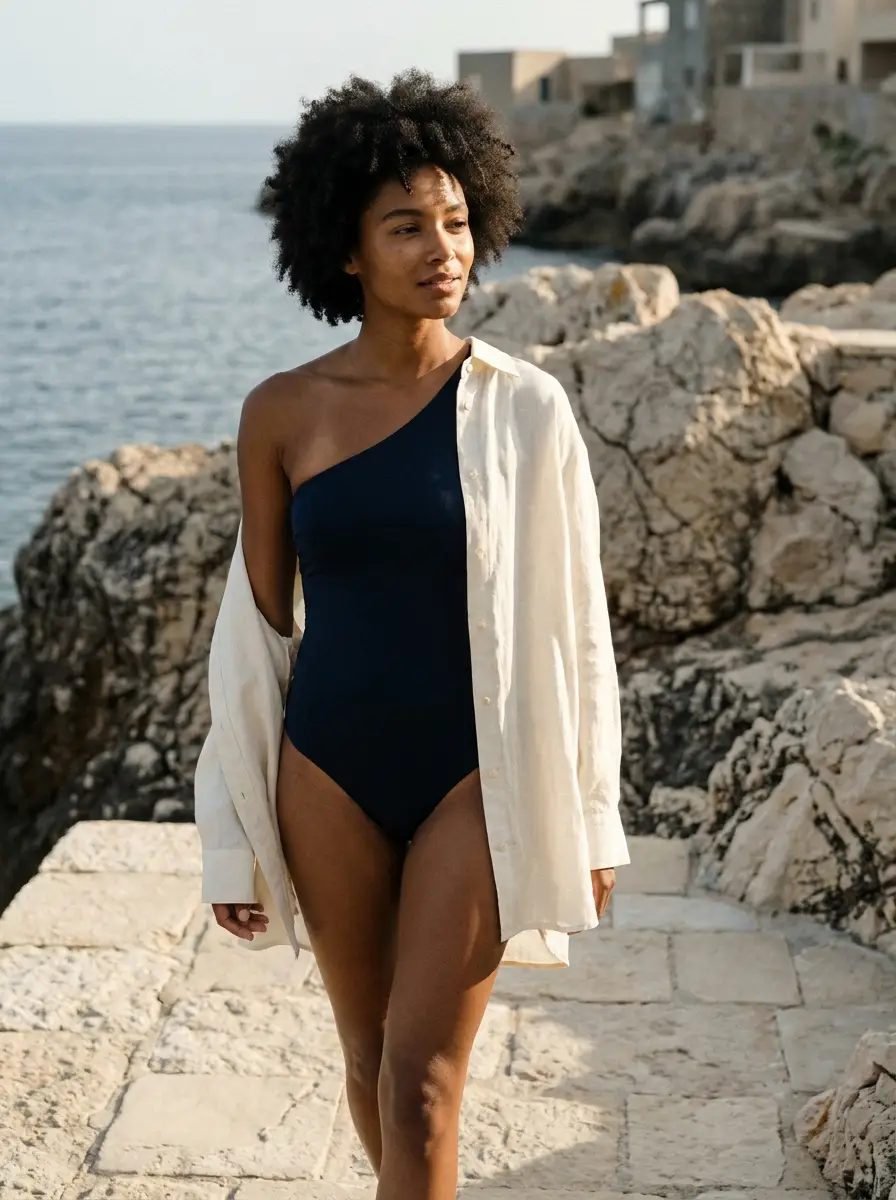
Swimwear Fabric Wholesale: 10 Tests Buyers Should Run Before Ordering
Before ordering swimwear fabric wholesale, buyers should verify wet opacity, stretch recovery, chlorine resistance, colorfastness, lining compatibility, and supply consistency to reduce production risk.
#SwimwearFabric, #SwimwearFabricWholesale, #SwimwearManufacturing, #SwimwearSupplier, #SwimsuitFabric, #PerformanceFabric, #StretchFabric, #FourWayStretch, #ChlorineResistantFabric, #FabricTesting, #FabricSourcing, #PrivateLabelSwimwear, #SwimwearBrand, #SwimwearDevelopment, #SwimwearLining, #FabricWholesaler, #TextileSourcing, #KoreanFabricSupplier, #ResortwearFabric, #ActivewearFabric, #TextileManufacturing, #B2BSourcing, #WOODA
Not every four-way stretch fabric belongs in the water.
A fabric can look perfect dry. Water reveals whether it belongs in your collection.
For swimwear brands, private-label manufacturers, sourcing managers, and wholesale fabric buyers, appearance is only the beginning. A material that looks beautiful on a cutting table may behave differently once it becomes wet, stretched, exposed to chlorine, or repeatedly worn.
The wrong fabric choice can lead to unexpected transparency, stretched-out edges, color changes, poor lining compatibility, or costly production revisions.
Before you commit to bulk yardage, make sure your fabric performs where your customers will actually wear it.
This swimwear fabric wholesale guide explains 10 essential evaluations to complete before approving fabric for production—and how to approach sourcing with greater confidence.

Quick Answer: What Should Buyers Test Before Ordering Swimwear Fabric?
Before placing a wholesale swimwear fabric order, buyers should evaluate:
- 01 Intended end-use suitability
- 02 Fiber composition and fabric construction
- 03 Wet opacity and coverage
- 04 Stretch, recovery, and shape retention
- 05 Chlorine, saltwater, sunscreen, and oil exposure
- 06 UV exposure and colorfastness
- 07 Outer fabric and lining compatibility
- 08 Drying performance and next-to-skin comfort
- 09 Prototype construction and real-world wear
- 10 Bulk production consistency and reorder conditions
A successful material approval is not based on one impressive specification. It is based on how the entire fabric system performs together.

1. Define the End Use Before Selecting Your Swimwear Fabric
Not all swimwear is designed for the same environment.
A competitive swimming suit may prioritize fit stability and controlled compression. A fashion bikini may emphasize softness, color, and visual appeal. A resortwear collection may require lightweight comfort, refined surface finishes, and attractive movement between the beach and everyday settings.
Before contacting a swimwear fabric supplier, define the product’s intended use.
| Swimwear Category | Key Purchasing Priorities |
|---|---|
|
01
Competitive swimwear
|
Fit stability, recovery, movement, and application-specific performance |
|
02
Pool training swimwear
|
Repeated chlorine exposure, shape retention, and durability |
|
03
Recreational swimwear
|
Comfort, coverage, elasticity, and color retention |
|
04
Fashion swimwear
|
Appearance, soft hand feel, stretch, and suitable wet coverage |
|
05
Resortwear and beachwear
|
Drape, visual appeal, drying behavior, and comfort |
|
06
Water-to-land activewear
|
Movement, comfort, coverage, and wet-to-dry behavior |
|
07
Children’s swimwear
|
Fit, coverage, comfort, durability, and applicable safety requirements |
A beautiful stretch fabric may be ideal for a resort cover-up but unsuitable for frequent chlorinated-pool use.
The first question is not “Which fabric looks best?” It is “Where, how, and how often will this fabric be worn?”
2. Compare Nylon/Spandex and Polyester-Based Swimwear Fabrics
Choosing between nylon/spandex and polyester-based constructions is one of the first decisions in swimsuit fabric wholesale sourcing.
Nylon/Spandex Fabric
Nylon-spandex blends are often considered when brands want a smooth hand feel, close-fitting comfort, stretch, and strong visual color possibilities.
They can be appealing for fashion swimwear, bikinis, and selected performance designs.
However, nylon content alone does not establish chlorine resistance, UV protection, or long-term recovery.

Polyester-Based Fabric
Polyester-based constructions, including selected polyester/elastane and polyester/PBT fabrics, may be considered for repeated swimming applications.
Their suitability depends on the yarn, knit structure, finishing process, and tested performance.

Important: A higher elastane percentage does not automatically guarantee better recovery.
Buyers should request available specifications for fiber composition, fabric weight (GSM), usable width, stretch direction, and relevant performance tests.
For brands comparing a recycled swimwear fabric supplier, recycled-content documentation and finished-fabric performance should be reviewed as separate requirements.
3. Test Wet Opacity—Not Only Dry Coverage
If your fabric becomes transparent when wet and stretched, the customer discovers the problem after production.
Wet opacity is especially important for white, pastel, nude, and light-colored printed swimwear.
A swatch may appear sufficiently opaque when dry but reveal more of the skin or lining when saturated and extended.
Recommended Wet Opacity Test
Evaluate the same sample under four conditions:
Dry and relaxed
Dry and stretched
Wet and relaxed
Wet and stretched

Compare the fabric against different skin-tone references and intended lining colors.
Inspect samples under natural daylight and typical indoor lighting. Whenever possible, build a prototype and assess coverage during actual movement.
Photographs can support the review, but they should not replace direct visual inspection.
For light-colored swimsuits, evaluate both the outer fabric and the complete lined garment.
Buyer takeaway: Do not approve a light-colored swimwear fabric based on a dry swatch alone.
4. Measure Four-Way Stretch and Recovery—Wet and Dry
Four-way stretch swimwear fabric must support movement in multiple directions without losing the intended garment fit.
But stretch and recovery are different properties.
Stretch describes how far the fabric extends.
Recovery describes how effectively it returns toward its original dimensions after that extension.
A fabric can stretch significantly and still develop unwanted residual growth.
What Should Buyers Measure?
Check:
- 01 Lengthwise and crosswise stretch
- 02 Recovery after repeated extension
- 03 Residual growth after relaxation
- 04 Wet versus dry behavior
- 05 Fit stability at the waist, shoulders, and leg openings
- 06 Performance after repeated wear and appropriate care cycles


Use a consistent testing method, extension level, relaxation period, and measurement procedure.
Remember that high compression is not necessarily the same as effective support or comfortable performance.
The goal is not maximum stretch. It is the right balance of stretch, recovery, coverage, and garment fit.
5. Check Chlorine, Saltwater, Sunscreen, and Oil Exposure
Not every performance swimwear fabric is suitable for repeated pool or ocean exposure.
Chlorinated water, saltwater, sunscreen, and body oils introduce different conditions that buyers should evaluate individually.
For regular pool use, consider chlorine-related color changes and potential deterioration in elastic performance.
For beach applications, examine saltwater exposure alongside sunlight, sunscreen contact, and repeated wet-to-dry cycles.
Request Relevant Test Information
Ask your supplier:
Has the exact construction been evaluated for chlorine exposure?
Which test methods and conditions were used?
Were changes in color, appearance, and elasticity assessed?
Does the result apply to the specific color and finish being ordered?

For example, ISO 105-E03 provides a standardized method for evaluating textile colorfastness to chlorinated swimming-pool water.
However, passing a colorfastness test does not automatically prove long-term elasticity retention or resistance to every swimming environment.
Never treat a general “chlorine resistant” claim as a substitute for application-specific evidence.
6. Review UV Exposure, Colorfastness, and Print Stability
American swimwear collections often target outdoor environments, where sunlight and repeated use can affect the appearance of a garment.
Evaluate deep colors, fluorescent shades, light prints, and specialty finishes according to their individual risks.
Check whether sunlight exposure produces visible changes in color, surface appearance, or hand feel.
Also distinguish between:
UV resistance of the material
UV protective performance of a finished garment
Colorfastness under relevant exposure conditions
These are not interchangeable claims.

When evaluating printed swimwear, compare the behavior of the base fabric, printed surface, and finished garment under stretch.
Sublimation prints and surface-applied finishes should not be assumed to behave identically.
For metallic, holographic, or other decorative stretch fabrics, request specific suitability information before considering direct-water applications.
7. Match the Outer Fabric with the Right Swimwear Lining
The lining is not merely an additional layer.
It is part of the garment’s structural and visual performance.
A suitable swimwear lining fabric should be evaluated for:
Stretch direction and extension compatibility
Recovery and residual growth
Wet opacity and coverage
Wet weight and drying behavior
Color compatibility
Seam construction and comfort

If the outer fabric stretches easily while the lining resists extension, the finished swimsuit may pull unevenly.
If the lining becomes heavy when wet, it can alter the garment’s feel and fit.
For white and pastel swimwear, test multiple lining shades rather than assuming white lining provides the best coverage.
The right outer fabric with the wrong lining can still produce the wrong swimsuit.
8. Evaluate Drying Performance, Hand Feel, and Garment Weight
A fabric’s dry weight does not tell the entire story.
Once wet, a swimwear construction may feel heavier, cling differently to the body, or create discomfort around seams and edges.
Evaluate:
Water retention and drying time under consistent conditions
Wet garment weight
Surface friction against the skin
Comfort at seams and binding areas
Drape and movement after saturation
Changes in hand feel following drying
Competition, leisure, and resort garments may require different priorities.
A heavier fabric is not automatically more supportive, and a lighter fabric is not automatically more comfortable.
Choose the construction based on the finished garment’s purpose.


9. Run a Buyer-Side Sample and Wear Test Before Bulk Approval
A technical data sheet is valuable. A physical prototype provides another level of information.
Run a Buyer-Side Sample and Wear Test Before Bulk Approval
A practical sample approval process should include:
-
01
Review the fabric swatch
Confirm appearance, hand feel, weight, and construction.
-
02
Measure dry stretch
Compare the fabric’s extension in both directions.
-
03
Evaluate wet stretch
Repeat observations after controlled wetting.
-
04
Check wet opacity
Examine coverage in relaxed and extended positions.
-
05
Review exposure resistance
Use suitable chlorine, saltwater, or other relevant tests.
-
06
Inspect after drying
Look for changes in color, feel, and recovery.
-
07
Test sewing compatibility
Evaluate needles, thread, seams, and edge finishes.
-
08
Combine the lining and shell
Check compatibility and garment balance.
-
09
Produce a finished prototype
Review fit, support, movement, and appearance.
-
10
Document wear-test feedback
Record issues before committing to bulk production.
Use consistent test conditions and keep clear records for each construction and color.
Where the application requires formal verification, arrange appropriate laboratory testing rather than relying only on informal in-house checks.
The Costliest Sample Is the One You Never Tested.
A preproduction sample may reveal a material problem that would be far more expensive to address after bulk cutting and sewing.
Test the fabric. Test the lining. Test the finished swimsuit. Then approve production.
10. Confirm Wholesale Supply and Reorder Consistency
The final test is commercial reliability.
A fabric can meet your development expectations but still create sourcing problems if the selected color, production schedule, or repeat availability does not match your business needs.
Before final approval, confirm:
Minimum order quantity (MOQ)
Minimum quantity per color
Sample and trial-order availability
Custom color development requirements
Fabric width, weight, and roll length
Production and shipping lead times
Reorder and repeat-production conditions
Color and performance consistency between lots
Relevant test reports and certifications
Packaging, shipping terms, and commercial documentation
Ask whether approved samples represent the same construction and finish intended for bulk supply.
For repeat orders, establish practical acceptance criteria for shade variation and performance differences.
A reliable supply decision protects both the first production run and the collection that follows.
Why U.S. Swimwear Buyers Should Consider WOODA Korea
Selecting a Korean swimwear fabric supplier should involve more than comparing price per yard.
The value lies in identifying materials suitable for the intended garment, reviewing specifications, evaluating samples, and coordinating the sourcing requirements before production.
WOODA CORP., LTD. is a Korean B2B textile supplier with more than 30 years of experience in performance and specialty stretch fabrics.
Its material categories include stretch tricot, nylon- and polyester-spandex constructions, performance mesh, printed fabrics, and distinctive surface finishes.
For U.S. swimwear brands, private-label manufacturers, and fabric distributors, WOODA can be a sourcing contact when exploring fabric options for swimwear, resortwear, and related performance apparel.
Not every material in a broad performance-fabric collection is suitable for direct or repeated water exposure. Specific construction, finish, and test information should be confirmed during selection.
A Better Sourcing Conversation Starts With Your Intended Application

Instead of requesting a generic fabric catalog, tell WOODA:
What type of swimwear or resortwear you are developing
Whether the garment is intended for pools, beaches, or primarily dry use
Your desired fabric composition, weight, and finish
Your target colors and estimated order quantity
Your production timeline
The testing information or sample evaluation you require
This allows the sourcing conversation to focus on relevant material options and outstanding performance requirements.


Frequently Asked Questions About Swimwear Fabric Wholesale
01 What is the best fabric for swimwear manufacturing?
There is no single best fabric for every swimsuit. Nylon/spandex and selected polyester-based fabrics are common options, but buyers should compare actual stretch, recovery, coverage, exposure resistance, and intended use.
02 Is every four-way stretch fabric suitable for swimwear?
No. Four-way stretch alone does not establish wet opacity, chlorine resistance, colorfastness, drying performance, or water-use suitability.
03 How do I check whether swimsuit fabric becomes see-through?
Test the material both dry and wet, in relaxed and stretched conditions. Use realistic backgrounds and evaluate a lined garment prototype, particularly for light colors.
04 How can I find chlorine resistant swimwear fabric?
Request construction-specific evidence, relevant chlorine exposure or colorfastness test information, and samples for your own evaluation. Confirm that the results match the intended frequency and conditions of use.
05 Can metallic or holographic stretch fabrics be used for swimwear?
Some specialty materials may be considered for decorative swimwear or poolside fashion, depending on their construction and verified suitability. Do not assume a reflective or coated material can tolerate chlorine, saltwater, sunscreen, or repeated immersion without testing.
06 Can U.S. private-label brands source wholesale swimwear fabrics from Korea?
Yes. U.S. brands can evaluate Korean textile suppliers for potential fabric sourcing, subject to material suitability, commercial terms, import requirements, and production conditions.
07 What should I send when requesting swimwear fabric samples?
Provide your intended application, target composition, approximate weight, colors, quantity, destination, production timeline, and required performance evaluations.
Choose the Right Fabric Before You Commit to Production
Your customers will experience the finished swimsuit in motion, under sunlight, and in real-world conditions—not just as a beautiful dry swatch.
The right swimwear sourcing strategy considers appearance, performance, construction, and supply consistency together.
For brands and manufacturers, that means fewer unanswered questions before production and a more informed material approval process.
The fabric you choose today shapes the collection your customers trust tomorrow.
Ready to Develop Your Next Swimwear Collection?
Tell WOODA whether you’re developing competitive swimwear, pool training apparel, fashion swimwear, or resortwear.
Share your target specifications, colors, quantity, and expected performance requirements. WOODA can help you explore relevant fabric options and discuss the information needed for sample evaluation.
WOODA CORP., LTD. — Korean Performance Fabric Sourcing
Moves with you. Shines with you.
답글 남기기